There is no other attachment processing technology during the production of non-woven fabrics. In order to achieve the diversity and special functions of the materials required for the product, the raw materials of non-woven fabrics will be treated with special processes.
Different technologies are produced according to different processing modes, and the final effects are also different.
Lamination and coating are more common processing technologies for non-woven fabrics, and their purpose is to make non-woven fabrics waterproof.
One. Production process
Laminated non-woven fabric
It is a composite material that is made by applying latex adhesive on the surface of non-woven fabric blank, and then compounding the non-woven fabric blank with polyethylene film through processes such as drying, high temperature treatment, and cooling, so as to enhance its waterproof, anti-pollution performance and tensile strength.
Coated non-woven fabric
It is a composite material that uses a professional machine to heat the plastic rice into liquid, and then pours the plastic liquid on one or both sides of the non-woven fabric through the machine. There is a drying system on one side of the machine, which can quickly dry and cool this layer of poured plastic liquid, and finally produce laminated non-woven fabric. It plays the role of strengthening, thickening, moisture-proof, waterproof, and anti-oxidation.
The difference between non-woven lamination and laminating is the difference in production technology and raw materials. The appearance and basic principle of the finished product are the same.
Two. Difference between lamination and coating
1. Production process
Laminated non-woven fabrics are produced by compounding the produced PE lamination and non-woven fabric in high-temperature equipment.
Laminated non-woven fabrics use equipment to melt plastic and spray it on the surface of non-woven fabrics. The advantages are fast production speed and low cost.
2. Color and appearance
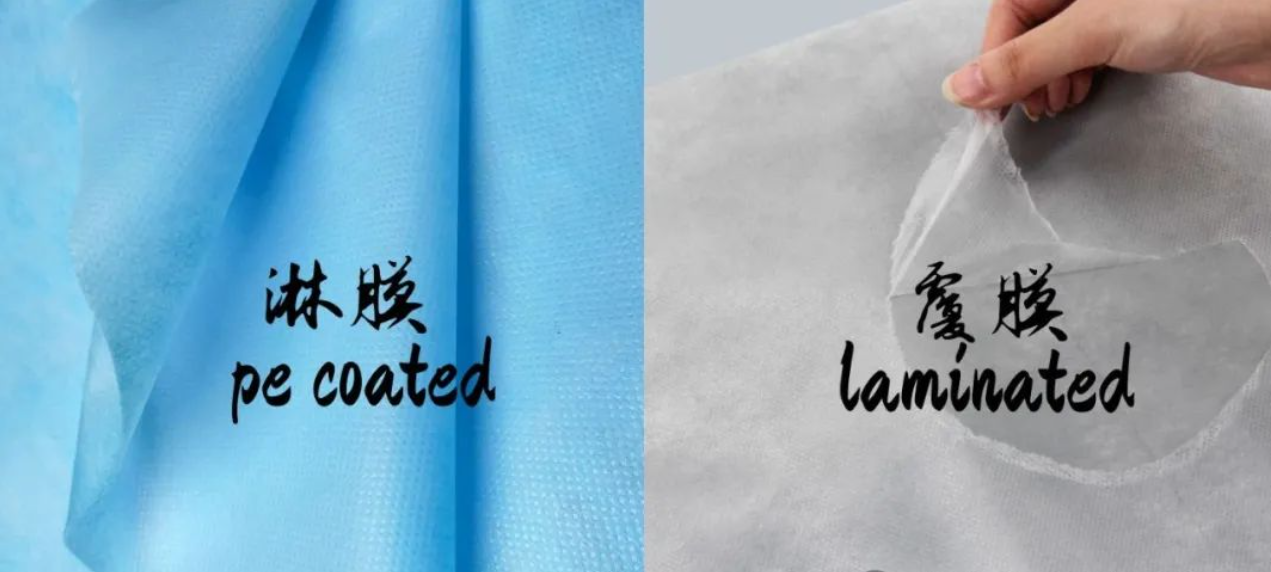
Laminated non-woven fabrics are finished composites, and their smoothness and color are better than those of laminated non-woven fabrics.
Laminated non-woven fabrics have obvious small holes on the surface because the film and non-woven fabric are formed at one time.
3. Aging speed
The PE lamination used in laminated non-woven fabrics is added with anti-aging agents before production, so the anti-aging effect is better than that of laminated non-woven fabrics.
Laminated non-woven fabrics have been produced, and the technical cost of adding anti-aging agents after the plastic is dissolved is too high. Generally, commonly used laminated non-woven fabrics rarely add aging agents, and they age quickly in the sun.
4. Physical properties
Laminated non-woven fabrics have good waterproof properties, tensile strength and scratch resistance, but due to the presence of the coating, their air permeability is relatively poor.
Laminated non-woven fabrics also have good waterproof properties and tensile strength, as well as better air permeability and softness, and are easier to process into various shapes.
5. Thickness
The laminating film is thicker, generally between 25-50 microns.
The laminating film is relatively thin, generally between 5-20 microns.
In general, although both are non-woven fabrics, due to the differences in their manufacturing processes and physical properties, there are certain differences in the application areas of laminated non-woven fabrics and laminated non-woven fabrics.
Three. Medical and health applications
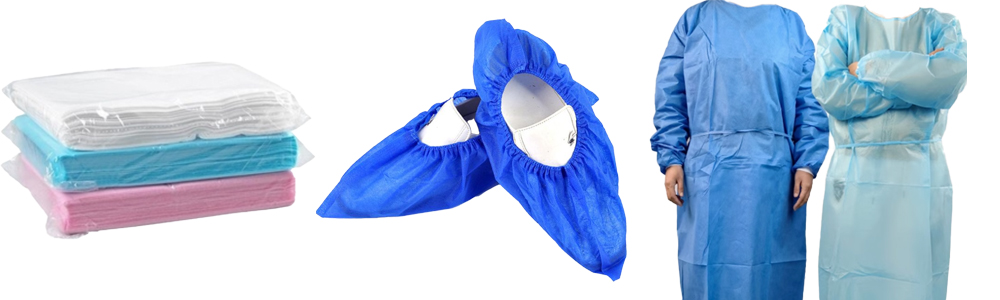
Laminated non-woven fabrics are widely used in the medical and health care industry because of their better breathability and softness than coated non-woven fabrics. Common products include disposable isolation suits, bed sheets, quilt covers, hole towels, shoe covers, toilet covers, etc.
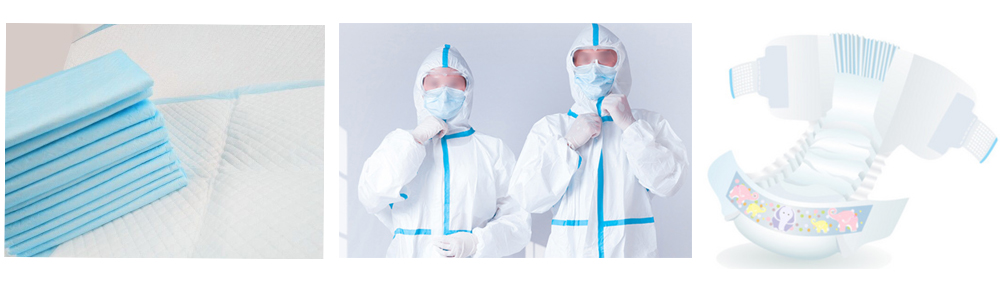
Composite PE breathable film is often used in protective clothing, pet pads, breast pads, surgical postpartum pads, medical sheets, diapers, personal care products, etc.
Manufacturers are mainly concentrated in Shandong, Zhejiang, Jiangsu, Guangdong, Hubei, Fujian and other places.