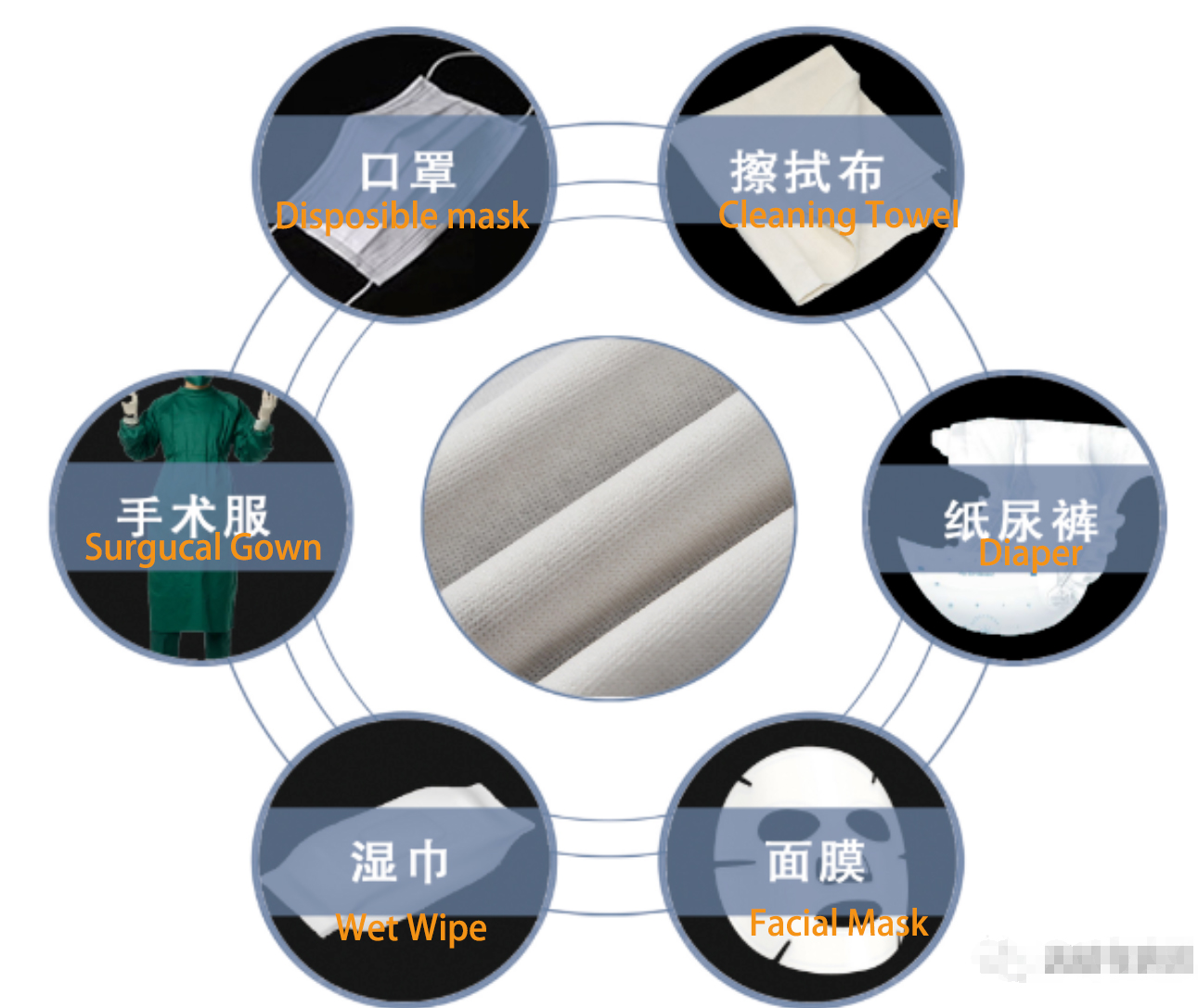
One. Product Introduction
Spunlace non-woven fabric is a kind of high-pressure fine water jet sprayed onto one or more layers of ultra-fine fiber non-woven fabric, so that the fibers are entangled with each other, so that the fiber web can be reinforced and have a certain strength. The fabric obtained after this reinforcement is spunlace non-woven fabric.
The fiber raw materials of general spunlace non-woven fabrics are very extensive, and can use polyester, nylon, polypropylene, viscose fiber, chitin fiber, ultra-fine fiber, Tencel, silk, bamboo fiber, wood pulp fiber, seaweed fiber and other materials.
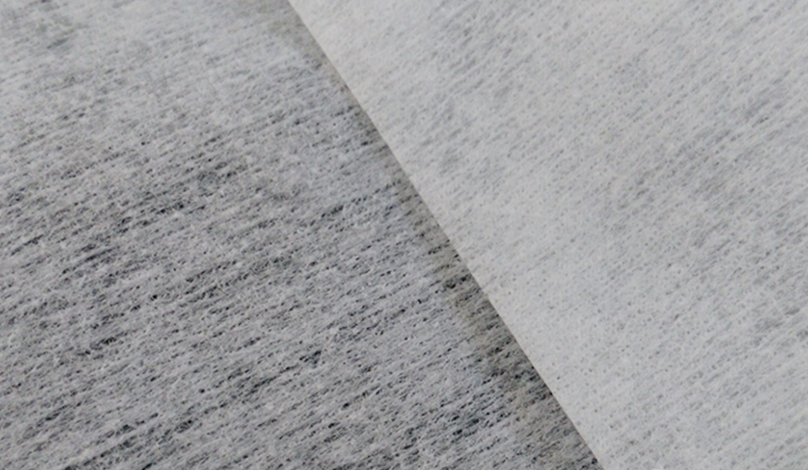
Two.Main raw materials
(1) Natural fibers: cotton, wool, linen, silk;
(2) Conventional fibers: viscose, polyester, acetate, polypropylene, polyamide;
(3) Differentiated fibers: ultrafine fibers, shaped fibers, low melting point fibers, high curl fibers, antistatic fibers;
(4) High-function fibers: aromatic polyamide fibers, carbon fibers, metal fibers.
Three.Processing principle
The principle of the fiber web reinforced by spunlace nonwovens is very similar to the needle punching
process, but spunlace nonwovens do notneed needles. It uses multiple fine water jets generated by high
pressure to spray the fiber web.After the water jet passes through the fiber web, it is supported by the
rebound of the net curtain and crosses the fiber web again.
As a result, the fibers in the fiber web are displaced, crossed, entangled and embraced under the hydraulic
action of the high-speed water jet crossing in different directions, so that the fiber web of the spunlace
nonwoven is reinforced.
Cross-laying: The horizontal and vertical strengths are relatively good, not easy to be pulled apart, and
more expensive.
Straight-laying: The longitudinal tension is good, the transverse tension is poor, and it is cheaper.
The gram weight is more than 50g. It is estimated that the cross-laying cannot be pulled by manpower,
the longitudinal tension of the straight-laying cannot be pulled apart, and the transverse tension is broken.
It depends on what it is used for. If there is no need to require the tension, use the straight-laying
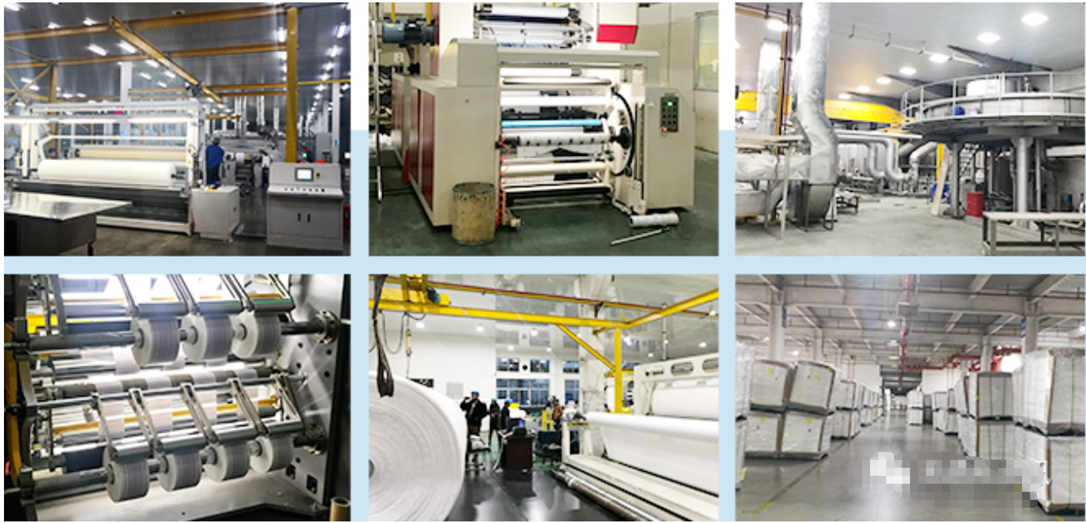
Four. Product Features
1. Spunlace nonwoven fabrics use water flow to pierce the fibers to entangle them flexibly, which will never
damage the fibers, so it does not affect the softness of the fibers. So it is both strong and soft.
2. The appearance looks very close to traditional textiles. Unlike fabrics made of other nonwoven materials,
it looks more natural and soft.
3. Because the strength of spunlace nonwoven fabrics is very high, it is wear-resistant and tensile, and it is
not easy to pilling. It does not
add any adhesive during production. Its strength depends entirely on the fibers, and it will not become
softer and softer with each wash.
4. It has a strong moisture absorption capacity and can quickly absorb moisture into the fiber web. It is also
very breathable and can be used to make clothes without feeling stuffy.
5. The appearance design of spunlace nonwoven fabrics is very rich, which can change many tricks and meet
various aesthetic needs.
6. The production process is long, the floor space is large, the equipment is complex, the water quality
requirements are high, and the energy consumption is high.
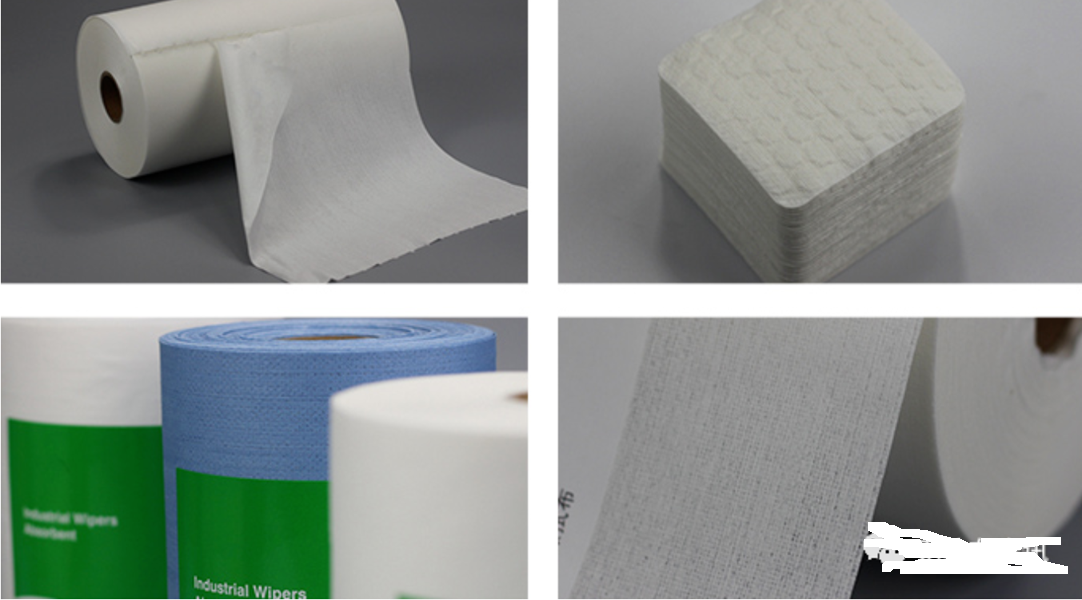
Five.Product Application
Spunlace nonwovens are suitable for use in the medical and industrial fields, and can also be used to make clothing and building materials.
They can also be used in homes to make various daily necessities.
(1) Medical and sanitary non-woven fabrics: surgical gowns, protective clothing, disinfection wraps, medical curtains, wound dressings, masks, diapers, civilian rags;
(2) Sanitary fabrics: wet face towels, magic towels, cosmetic cotton, soft towel rolls, beauty products, sanitary napkins, sanitary pads and disposable sanitary fabrics, etc.;
(3) Home decoration non-woven fabrics: wall coverings, tablecloths, bed sheets, bedspreads, etc.;
(4) Clothing non-woven fabrics: linings, adhesive interlinings, flakes, shaping cotton, various synthetic leather base fabrics, etc.;
(5) Industrial non-woven fabrics: filter materials, insulation materials, coating base fabrics, cement packaging bags, geotextiles, covering fabrics, etc.;
(6) Agricultural non-woven fabrics: crop protection fabrics, seedling cloths, irrigation cloths, thermal insulation curtains, etc.;
(7) Other non-woven fabrics: high-end rags for electronic professions, high-end rags for instruments and meters, aviation rags, space cotton, thermal insulation and sound insulation materials, oil-absorbing felt, cigarette filters, tea bags, etc.