
01 Basic Information
Hot Air Through Nonwoven Fabric
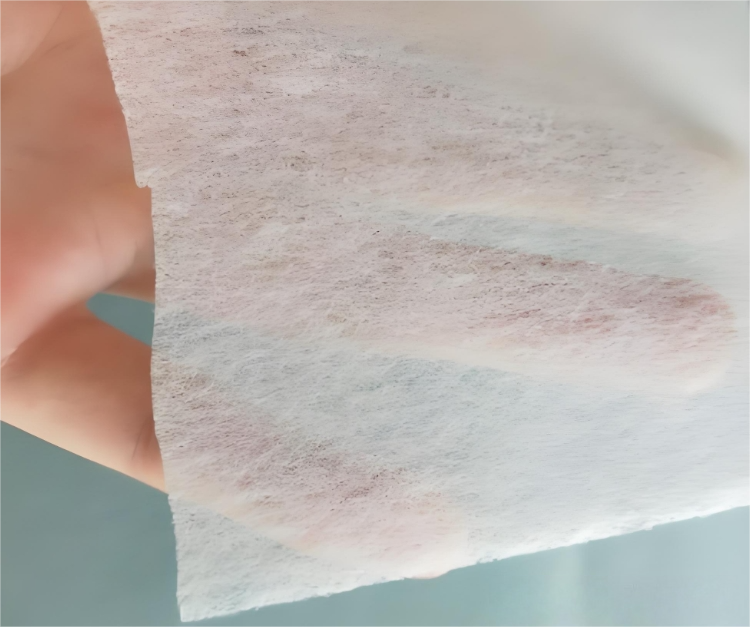
Definition:
Hot Air Through Nonwoven Fabric is a dry-laid nonwoven fabric produced by carding short fibers into a web, which is then bonded when hot air penetrates the web, causing the fibers to melt and adhere.
Process and Material Characteristics: ES Fiber (Core-Sheath Structure Bicomponent Fiber)
ES (Ethylene-Propylene or Ethylene-Polyethylene Sheath/Core) fiber is a bicomponent composite fiber with a core-sheath structure.
When heated, a portion of the components melts, resulting in point-like bonding (mutual welding) between fibers, rather than block-like bonding.
This results in large void spaces between the fibers, leading to excellent softness and bulkiness.
Fiber Components: Commonly used components are PE/PET or PE/PP.
Production Mechanism (Principle of Bonding):
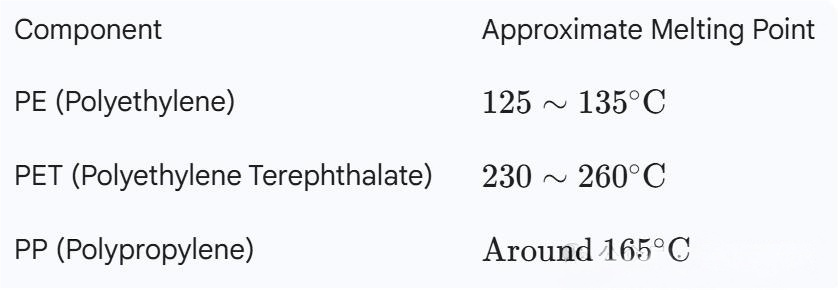
When the oven temperature reaches close to the melting point of the sheath component, the sheath component begins to partially soften, melt, or flow.
This molten sheath component then binds adjacent fibers together.
Since the core component has a higher melting point, it maintains its physical properties, such as shape, stability while the sheath melts.
Fiber Fineness (Denier):
Fibers with a fineness of 0.8Dto 3.0D are typically used.
Fine denier fibers are used for the top and bottom layers to ensure good softness.
Coarse denier fibers are used in the acquisition/distribution layer (ADL) to facilitate the downward penetration of liquid.
Fiber Finish/Oil Agent:Includes conventional spinning oils, dry-type finishes, and functional finishes.
Post-Processing Methods:Methods such as perforating (punching) and embossing are used to enhance the product's visual effect and improve liquid permeability/strike-through capability.
02 Process Flow
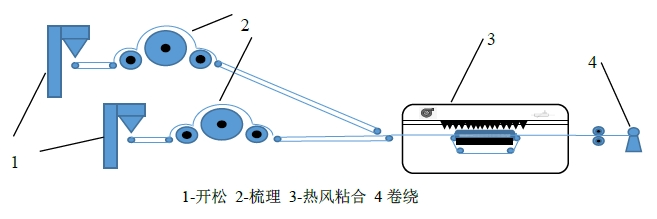
The process involves feeding ES fibers of different fineness into separate baling openers (or opening machines) according to specific weights. After opening and blending, the fibers are carded into webs, resulting in separate top and bottom fiber webs. These webs are then sent into a hot-air oven for thermal bonding and consolidation. Finally, the finished material is cooled and wound into the final hot-air nonwoven fabric.
Opening and Blending (开松混合)
Purpose of Opening (开松):
To decompose fiber clumps or bales, which consist of different types or components of fibers, into small fiber bundles.
Purpose of Blending (混合):
To uniformly blend fibers of different types or components according to the preset ratio.
Basic Requirements:
The fibers must be uniformly mixed.
The fibers should be opened as fully as possible.
Fiber damage must be avoided.
Carding and Web Forming (梳理成网)
Purpose of Carding (梳理):
After opening and blending, the carding machine directly separates the fiber bundles into individual fibers.
It then lays the fibers down to form a thin fiber web.
Working Elements of the Carding Machine
The carding machine has many working elements, including the licker-in roller at the front end, worker rollers, the main cylinder, the stripper roller, the doffer at the rear end, and the condensing roller.
Many of these working elements are covered with card clothing (needle cloth).
The direction of the carding teeth, the speed of movement, the distance (gauge) between the carding components, and the clearness of the teeth all affect the fibers differently. These actions include individualizing (carding), stripping, and transferring actions.
Hot-Air Through-Air Bonding (热风穿透加固)
Equipment Structure:
The common structural form is a flat-bed through-air thermal bonding oven.
Main Function
In a flat-bed hot-air oven, the hot-air heating zone is typically divided into several sections.
Each section may have a different temperature, performing different actions on the web: some sections are for heating the web, others for drying, and some for setting (stabilizing) the fiber web shape.
Web Consolidation Process (The Flow)
1. The carded fiber web is conveyed by a transport belt/conveyor screen into the hot-air oven.
2. External air is drawn in by the main fan and sent to the heater to be warmed up.
3. The heated air is delivered to the main blowing air duct.
4. The hot air emerging from the blowing duct is sprayed directly onto the fiber web, causing the fibers in the web to heat up, melt, and adhere (bond) together.
5. The hot air that has penetrated the web is then introduced into the main exhaust/suction duct under negative pressure and returned to the main fan (recirculated), allowing for the repeated use of the hot air.
6. The consolidated web, having been penetrated and strengthened by multiple streams of hot air, is transferred by the conveyor screen to a calender (or smoothing unit) to remove surface fuzz/fiber fly, and then passed through cooling rollers for cooling and stabilization before being wound up.
03 Application Area

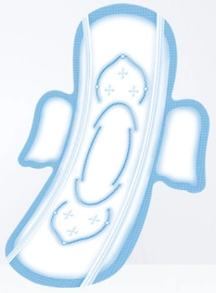
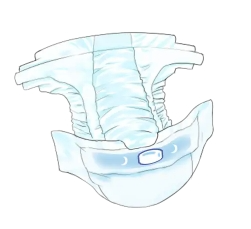
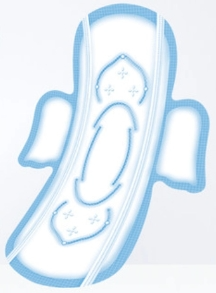
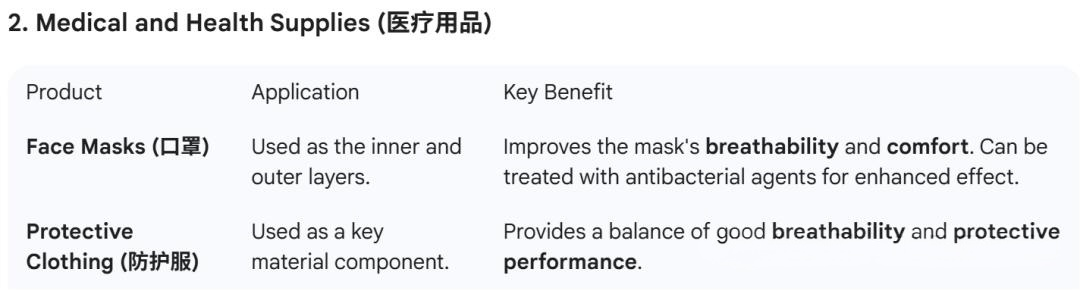
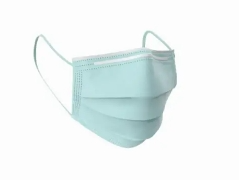
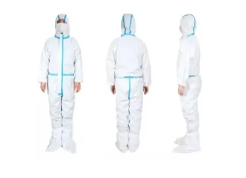
The development trend of Hot Air Through Nonwoven Fabric is mainly reflected in the continuous growth of market size and the expansion of application areas.The Hot Air Through Nonwoven Fabric market is experiencing rapid growth globally. It is projected that the market size will continue to expand in the coming years, reaching US$20 billion by 2027, with a compound annual growth rate (CAGR) of approximately 5%. The China market size is also continuously growing.
It is projected that the market size will reach RMB 68 billion by 2027, with a CAGR of approximately 9.5%.
This trend is driven by multiple factors, including technological innovation, increased market demand, and policy support. In the future, with continuous technological advancements and market expansion, the application areas of hot-air nonwoven fabrics will further expand, and the market size will continue to grow.