
Common Adhesive Problems in Diaper Production and How to Solve Them
In diaper manufacturing, hot melt adhesive performance directly impacts product quality and production stability. Common adhesive issues such as stringing, poor bonding, odor, or unstable spray patterns can lead to downtime and product defects. This article reviews typical adhesive problems in diaper production and practical solutions to address them.
Typical Hot Melt Adhesive Issues in Diaper Manufacturing
Adhesive problems often arise from mismatched formulations, improper application temperature, or incompatibility with machine speed. Identifying the root cause is essential to maintaining consistent diaper quality and reducing waste.
By optimizing adhesive selection and application parameters, manufacturers can significantly improve production efficiency.
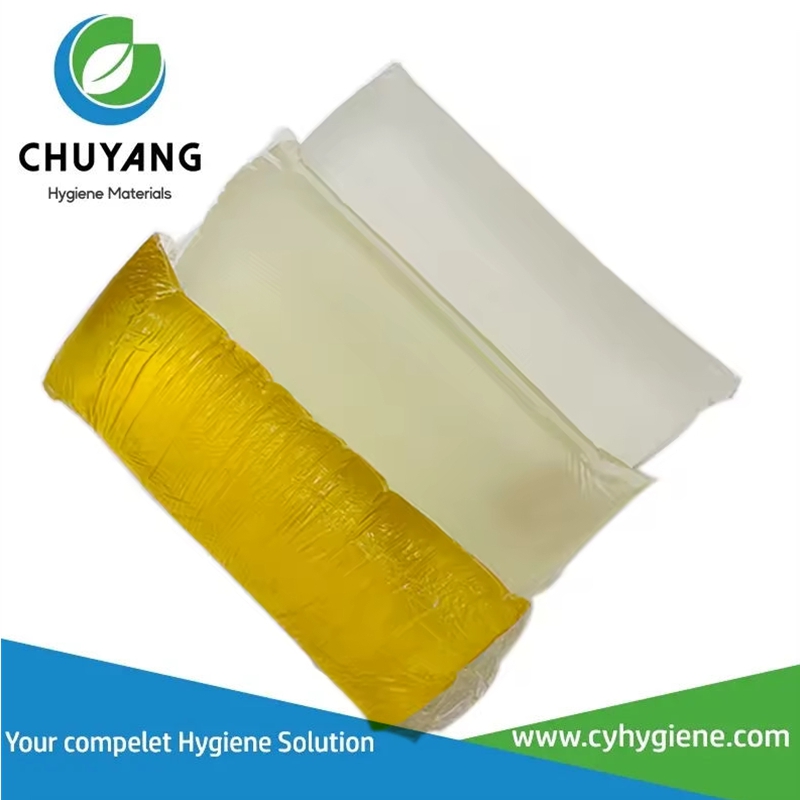
Causes and Solutions for Adhesive Failures
Stringing: Often caused by low viscosity or incorrect temperature settings; can be solved by adjusting formulation or application temperature.
Poor Bonding: Results from insufficient adhesive strength or contamination; requires improved surface compatibility.
Spray Instability: Linked to nozzle design or adhesive sprayability; optimized spray-grade adhesives reduce this issue.
Odor Problems: Can be minimized by selecting low-odor, non-fluorescent adhesive formulations.
Improving Production Stability Through Adhesive Optimization
Stable adhesive performance ensures consistent bonding, reduces rework, and minimizes machine downtime. Selecting adhesives designed for high-speed diaper lines is critical for long-term production efficiency.
Regular process evaluation and supplier technical support play an important role in maintaining stable adhesive application.

Technical Support from Quanzhou Chuyang
Quanzhou Chuyang provides not only reliable hot melt adhesives but also technical guidance to help manufacturers solve adhesive-related challenges efficiently.
Our solutions are designed to support stable, high-quality diaper production.