There are many kinds of daily paper commonly used in life, which can be divided into three categories: toilet paper, tissue paper (facial tissue, handkerchief paper, napkin paper) and wiping paper (kitchen paper, hand towel paper). People's main requirements for daily paper are good softness, good water absorption, certain strength, and no shedding or powdering.
The preparation of household paper chemicals includes equipment for the configuration and metering of wet strength agents, softeners, bactericides, screen washers, Yankee spray agents and other chemicals. Chemicals are added to the wet end of the pulp and paper machine to ensure the wet strength of the paper sheets and the physical properties of the finished product, prevent foaming, etc., and ensure the normal operation of the paper machine.
Chemical classification and physical and chemical properties
(1)Wet strength agent:
Wet strength agents are mainly used in the papermaking industry. Wet strength agents are now mainly PAE wet strength agents. PPE (PVA) wet strength agent is a new generation of non-toxic and odorless papermaking additives commonly used in the world that can greatly improve the dry and wet strength of the page. It is suitable for the production of all kinds of paper with wet strength requirements. Because of its retention and filtration properties, it can also be used as a retention and filtration agent in the papermaking process. Therefore, PPE wet strength agent is an excellent additive with a wide range of uses and broad prospects.
PPE (PAE) wet strength agent is the full name of polyamide polyepichlorohydrin resin. It is a water-soluble, cationic, thermosetting resin that does not contain formaldehyde polymers, is non-toxic and odorless, can be papered under neutral, slightly alkaline and acidic conditions, and has a wide range of pH values. PPE wet strength agent has a stronger reinforcing effect on wood pulp than on straw waste paper. As the beating degree increases, the surface area of pulp fibers increases, the adsorption capacity for wet strength agent increases, and the dry and wet strength of the finished paper increases accordingly. It has a strong adsorption effect on negatively charged fillers, sizing agents and fine fibers, and has obvious retention and filtration effects in the papermaking process. The amount of addition depends on the wet strength requirements of the paper. Excessive addition will cause flocculation of the pulp, affecting papermaking. The paper uniformity and the recycling of damaged paper will cause serious adhesion to the hair and cylinder; the different quantitative of paper sheets have a certain influence on the retention rate of PPE wet strength agent; after adding PPE, the wet strength of the paper sheet after drying is only about 70%, and it takes 7-15 days of aging period to make the wet strength reach the maximum value; the use of PPE can increase the dry strength by about 15-20%; the retention and filtration effects are obvious, the first-pass retention rate of the fiber can be increased from about 70% to more than 80%, and the clarity of white water is significantly improved; it has a synergistic effect on AKD and can reduce the amount of AKD; it improves the folding resistance, surface strength and transverse expansion rate of paper, and has a good effect on reducing wet paper breakage during paper machine operation.
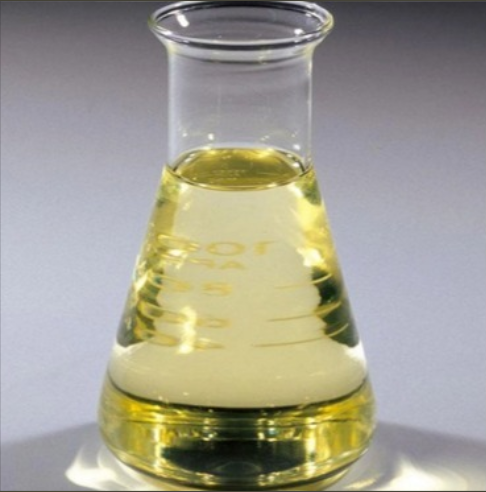
The appearance of PAE resin is a transparent liquid, light yellow to amber viscous, with a solid content of 12.5±0.5﹪, a density of 1.03 g/cm3, a viscosity of 30-90 m Pa.s (25℃), and a pH value of 3-4.5. Solubility: Easily soluble at room temperature. This product is non-toxic, environmentally friendly and easy to use. Its main function is to improve the wet strength of paper, and at the same time, it can also improve the dry strength of paper, improve the retention rate of fillers and fibers, and the softness of paper.
(2)Dispersant
The main component of dispersant is polyacrylamide, which is a high molecular weight compound. As a dispersant, polyacrylamide improves the strength of paper. Adding polyacrylamide to pulp can increase the retention rate of fine fibers and filler particles on the net and accelerate the dehydration of paper. The mechanism of action of polyacrylamide is that the particles in the pulp are flocculated by electrical neutralization or bridging and retained on the filter cloth. It is mainly polyacrylic acid salt, white shiny small particles, non-toxic and odorless, with an effective content of ≥ 96%, a molecular weight of 20 million, and is soluble in cold and hot water. In the papermaking process, paper fibers and fillers in the pulp are hydrophobic and tend to flocculate into agglomerates, which often makes it difficult to produce paper with uniform performance and strength that meets the requirements. It is necessary to add an additive to increase the viscosity of the pulp to facilitate the uniform dispersion of fibers and fillers, so that the paper produced is uniform, smooth, flexible and without holes, so that the papermaking performance is stable, and it is not easy to break or powder during papermaking. At the same time, it can improve the tensile strength and dry and wet strength of paper products and save pulp. Bag storage. One dispersant is polyoxyethylene ether (PEO)
(3) Softener:
Softener is a kind of chemical substance that can change the static and dynamic friction coefficient of fiber. When the static friction coefficient is changed, the hand feels smooth and easy to move on the fiber or fabric; when the dynamic friction coefficient is changed, the fine structure between fibers is easy to move relative to each other, that is, the fiber or fabric is easy to deform. The combined feeling of the two is softness. Softeners are divided into four types according to ionicity: cationic, non-ionic, anionic and amphoteric quaternary ammonium salt.
The main component is cationic surfactant, which appears as a white or light yellow liquid and is soluble in water. The pH (25℃) is 3.0-5.5, the flash point is: >93℃, and it is stable at room temperature.
One softener is a complex of diethanolamine oleate and quaternary ammonium salt of fatty acid.
(4)Defoamer:
Papermaking defoamer is designed for the foaming characteristics of papermaking process in the papermaking industry. The use of this product can effectively control pulp and foam overflow and improve papermaking quality. It is widely used in defoaming of papermaking systems, and can also be used for defoaming of papermaking wastewater treatment, antifreeze, and distillation systems. The foam in papermaking white water mainly comes from many chemical additives added to the pulp pool during the pulping process, such as filter aids, retention aids, wet strength agents, sizing agents, etc. They are easy to generate bubbles during the pulping and white water closed circulation process. Domestic defoamers are mainly hydrocarbons, oils and silicones, while the most prominent advantage of fatty alcohol defoamers is that they can quickly and quickly remove gas from the pulp and eliminate water surface foam, with minimal impact on sizing, and low cost of use. It is the development direction of papermaking defoamers today.
One is mainly composed of polyether non-ionic surfactants; brown or yellowish brown liquid; pH: 3.5~7.0; flash point: >100℃; melting point (℃): around 0℃; miscible in alcohol, chloroform, ether, oil, emulsified with water into milky white liquid, which will precipitate over a long period of time.
The other is a milky white flowing liquid, a light yellow flowing liquid, with an active matter content of ≥ 30%/100%, in a non-ionic form. Commonly used alcohols are alcohols with supporting structures, such as diethyl ethanol, cyclohexanol, hexadecanol, isooctyl alcohol, diisobutyl carbinol, etc. Used in pulping, papermaking, coating processes, etc. in the papermaking industry. Defoamers are non-hazardous goods and can be stored under greenhouse conditions. Do not expose them to the sun or approach heat sources. They are stored in barrels.
(5) Fungicides
Papermaking fungicides are a new generation of chemical agents used for papermaking sterilization and mildew prevention. They have excellent characteristics such as high efficiency, broad spectrum, and low toxicity. They can kill and remove harmful bacteria in pulp in a short time. High-efficiency and broad-spectrum fungicides are usually non-oxidizing fungicides. Their bactericidal mechanism is to increase the permeability of cell membranes, cut off the supply of nutrients to cell tubes, destroy the metabolism inside cells, or change the protein structure of cells, prevent energy production inside cells and limit enzyme synthesis.
One is hydrogen peroxide fungicide.
One is thiocarbamate fungicide.
Industrial broad-spectrum fungicide, a mixture of 2-methyl-5-chloro-4-isothiamidine-3-one and 2-methyl-4-isothiamidine-3-one; yellow clear liquid; pungent; pH value (stock solution) 2.0~4.0; soluble in cold water and hot water; density at 25 ℃: about 1.28g/m3; flash point boiling point: >100 ℃. Used to kill various bacteria, fungi and other microorganisms in pulp in the papermaking process. Stored in barrels in the chemical warehouse.
(6) Stripping agent:
A mixture of food-grade mineral oil and various active substances. Appearance is light yellow liquid, easily soluble in water, viscosity 30-80m Pa.s (25℃). The function is to control the grain of paper, control sticking to the cylinder, make the paper machine run normally, improve efficiency, lubricate the scraper, extend the service life of the scraper, improve the feel of paper, etc. Used in conjunction with the sticking agent and improver, sprayed directly onto the surface of the drying cylinder through a special spray system.
A mixture of hydrogenated base oil, surfactant and lubricant, with an effective content of 95±2%. Milky white oily liquid, viscosity: ≤30mPa·s (25℃), solubility: easily soluble in cold water, non-toxic. The main function is to prevent the wrinkling scraper and cleaning scraper from damaging the surface of the drying cylinder.
(7) Cylinder adhesive:
A mixture of various polymers and protective additives, made from polyamide and protective additives that can be cross-linked under the humidity of the Yankee dryer. It is a light yellow liquid, easily soluble in water, with a density of 1.05g/cm3 and a viscosity of 20-30m Pa.s (25°C). Its function is to spray on the surface of the dryer to form a thick coating, reduce the contact pressure between the scraper and the dryer, protect the dryer, block the direct contact between the scraper and the cylinder body, extend the service life of the scraper, improve the heat transfer between the dryer and the paper web, improve the production efficiency of the machine, and easily adjust the moisture distribution of the paper web.
A mixture of high molecular cationic polymer, polyvinyl alcohol, methylene bisacrylamide, and propylene glycol, non-toxic. Cylinder adhesive can quickly form a uniform and stable coating on the surface of the dryer. Under the action of the coating, the paper web is closely attached to the surface of the dryer. It is used to adjust the adhesion between the paper web and the dryer formed by the coating.
It is packaged in plastic barrels, and special packaging can also be used as needed. Store in a cool and ventilated place indoors, avoid sunlight, at 5-35℃, sealed and stored for 6 months.
(8) Modifiers
Mainly contain phosphate components. Appearance is slightly yellow to colorless liquid, easily soluble in water, density is 1.03g/cm3. Used on medium and high speed household paper machines, it can soften the base coating. Its function is to reduce the adhesion of the base coating, increase the coating thickness, protect the drying cylinder, and extend the life of the scraper.
(9) Resin control agent
Chemicals that can prevent the free resin in wood pulp from precipitating and agglomerating during the papermaking process, thus causing production obstacles. In the early days, starch or gelatin was added to the pulp as a protective colloid to prevent resin agglomeration, and sodium hydroxide or alum was used to adjust the acid value to prevent resin precipitation, but the effect was not obvious. Later, water softeners such as aminocarboxylic acid chelates were used to chelate metal ions such as calcium, magnesium, and iron in water to eliminate their harmful effects. In recent years, resin control agents have been developed. They are composed of organic dispersants such as sodium polyacrylate and sodium methylene bisnaphthalene sulfonate and non-ionic surfactants such as polyoxyethylene alkylphenol ethers. They can disperse resin particles and reduce adhesion, thereby avoiding obstacles caused by agglomeration.
(10) Felt cleaning agent
A type of felt cleaning agent is fatty acid dimethyl amide.