
I. Classification and Structure
Disposable absorbent hygiene products mainly include feminine hygiene products, baby hygiene products, and adult incontinence products.
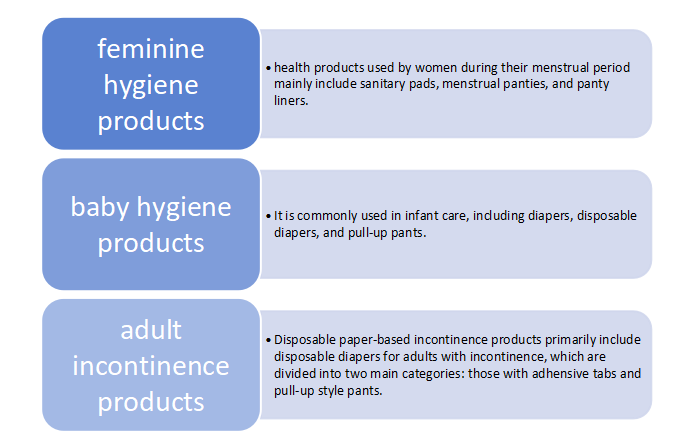
Disposable hygiene products typically consist of a top layer, a distribution layer, an absorbent core layer, and a bottom layer. Below, we will provide a detailed description of the widely used polymer materials in each of these layers.
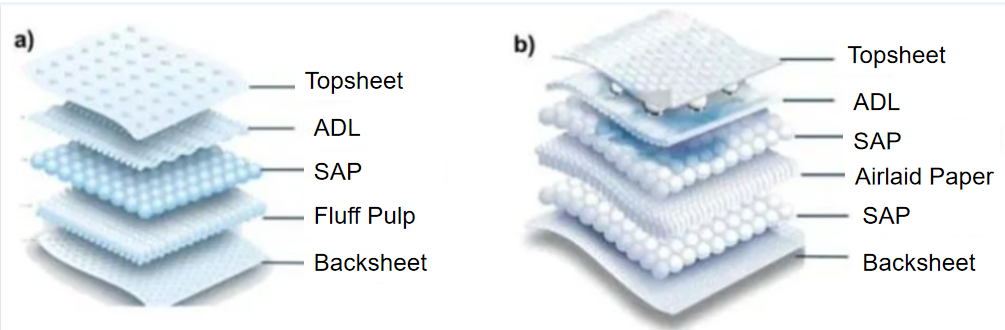
II. Top Layer and Distribution Layer Materials
The top layer material is in contact with the user's skin. When the user's bodily fluids (generally urine) are discharged, the top layer material is the first to come into contact with the fluid. However, the top layer material does not have the ability to absorb liquid; its key function is to conduct the liquid inward. Therefore, the top layer material needs to have excellent liquid conductivity and permeability to keep the skin dry and comfortable.
The distribution layer is located between the top layer and the absorbent core, and its function is to accelerate liquid diffusion and penetration, and reduce liquid rewetting.
Currently, the top layer and distribution layer of commercially available sanitary products are generally made of soft-feeling hot-air non-woven materials. This material uses ES bicomponent fibers, which are formed by carding the fibers into a web and then heat-bonding them for reinforcement.
1. ES Bicomponent Fiber
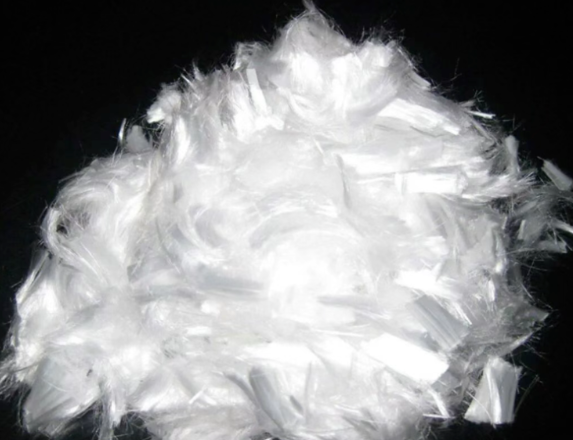
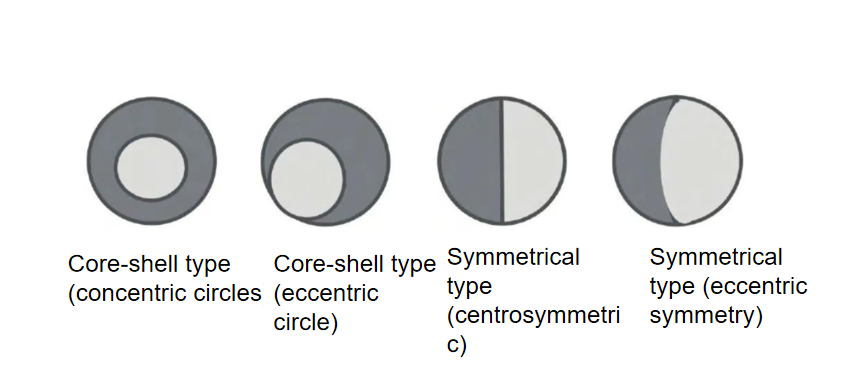
ES fiber is a composite fiber produced from two different polymeric materials (PP/PE, PET/PE, PP/PP), including core-sheath structures and symmetrical structures. The core-sheath structure is further divided into concentric and eccentric structures.
2. ES Hot Air Nonwoven Materials
Bonding State of ES Fiber Hot Air Nonwoven Fabric
ES fibers are used in the thermal bonding process of nonwoven fabrics.
When the carded fiber web is thermally bonded through a thermal calendering or hot air through-bonding structure, the low-melting point components form and melt at the intersection points of different fibers. After cooling, the fibers at the non-intersection points retain their original state. This is a form of "point bonding" rather than "surface bonding."
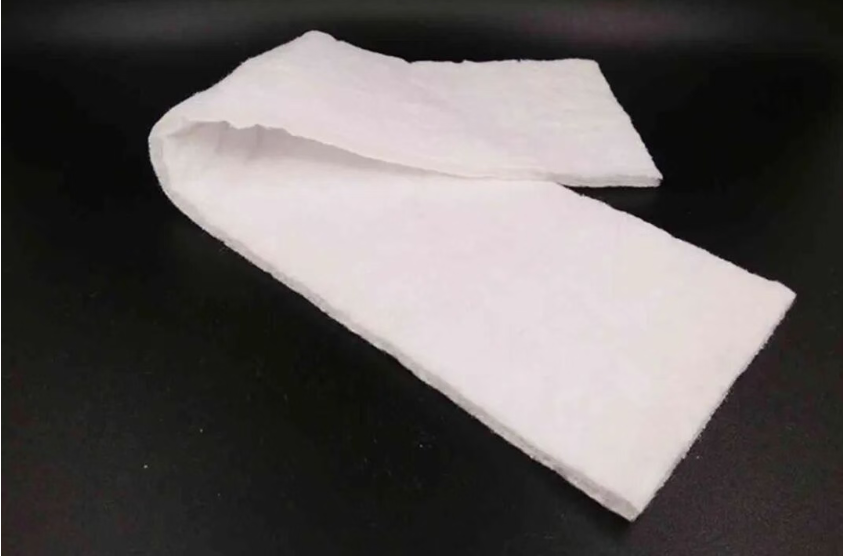
Due to the unique core-sheath structure of ES fibers, the resulting nonwoven fabric (commonly known as hot air nonwoven fabric) has a stable three-dimensional structure and good resilience. The pores in the fabric can absorb and store more than 10 times its own weight in liquid, and the interconnected pores promote rapid liquid transfer. Therefore, this material has fluffiness, softness, and excellent liquid wicking properties.
In recent years, thermal bonding technology has developed rapidly, especially in high-end sanitary napkins and diapers, where its application has become irreplaceable by other nonwoven fabrics.
III. Absorbent Core Material and Backsheet Material
The absorbent core material is a key component of disposable absorbent hygiene products, responsible for absorbing, distributing, and storing liquids. It needs to possess characteristics such as rapid absorption, leak prevention, and anti-reflux properties. It is typically a composite material formed by mixing superabsorbent polymer (SAP) particles with fluff pulp and then encasing them in tissue paper or a thin non-woven material. The liquid absorption performance directly affects the quality of disposable absorbent hygiene products.
The backsheet material primarily serves as a leak barrier and must have good water resistance and leak-proof properties while also being breathable. Early hygiene products mainly used plastic film with good sealing properties as the support layer. Later, breathable perforated films were often used as the support layer to improve the material's breathability.
1. Superabsorbent polymer (SAP) particles
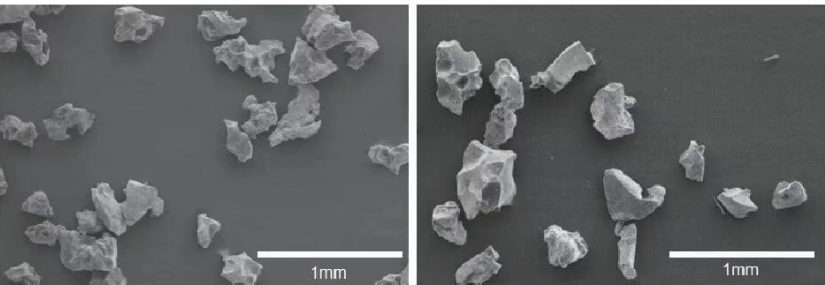
Superabsorbent polymers (SAPs) are polymeric materials with a three-dimensional network structure, typically containing hydrophilic groups such as hydroxyl, carboxyl, amino, amide, sulfonic acid, sulfinic acid, and phosphoric acid groups. They are insoluble in water and can absorb large amounts of water, retaining it even under pressure and heat.
Due to the large number of water-absorbing groups in the molecular chains, they can form hydrogen bonds with water molecules and physically adsorb a large number of water molecules, locking them within the swollen gel network. This allows them to retain water even under external pressure or heating.
However, after absorbing water, SAPs form a hydrogel, which may cause disposable hygiene products to harden or develop lumps and bulges, affecting wearing comfort.
2.Fluff pulp fibers
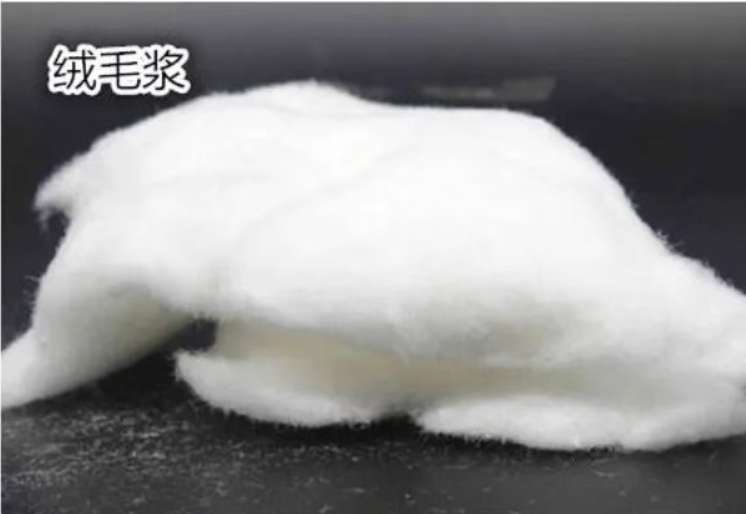
Fluff pulp is a type of pulp used as an absorbent medium, consisting of wood pulp or grass pulp that has undergone bleaching and extraction of organic solvent extracts.
Traditional absorbent cores made of fluff pulp consist of a mixture of SAP (superabsorbent polymer) and fluff pulp in a certain proportion. The fluff pulp can fix the SAP to a certain extent, and its wicking action can solve the problem of gel blockage after SAP absorbs liquid, while also reducing the tendency of SAP to clump and swell after absorbing liquid.
IV. Conclusion
For future disposable absorbent hygiene products, new surface layers will develop towards functional features such as reduced rewetting, convex shapes, and environmental friendliness. Currently, the distribution layer mainly uses hot-air nonwoven materials, and in the future, hot-air composite distribution layers will be a major development trend; at the same time, perforated film distribution layers will also gradually enter the market. Due to the decreasing availability of softwood, the raw material for fluff pulp, future absorbent cores will reduce the amount of fluff pulp used and replace it with green, functional fibers, while the core will also develop towards synthetic materials.