
Polylactic acid (PLA) nonwoven fabric is a bio-based, biodegradable, and environmentally friendly material made from lactic acid, which is produced through the fermentation of plant resources (such as corn and sugarcane), followed by polymerization and spinning processes.
PLA: It is one of the most common biodegradable plastics, a polymer obtained by polymerizing lactic acid as the main raw material.
Raw materials: Typically extracted from starch in renewable plant resources such as corn, cassava, and sugarcane.
Process: Starch → Glucose → Fermentation to produce lactic acid → Polymerization to produce polylactic acid → Spinning into a web → Nonwoven fabric.
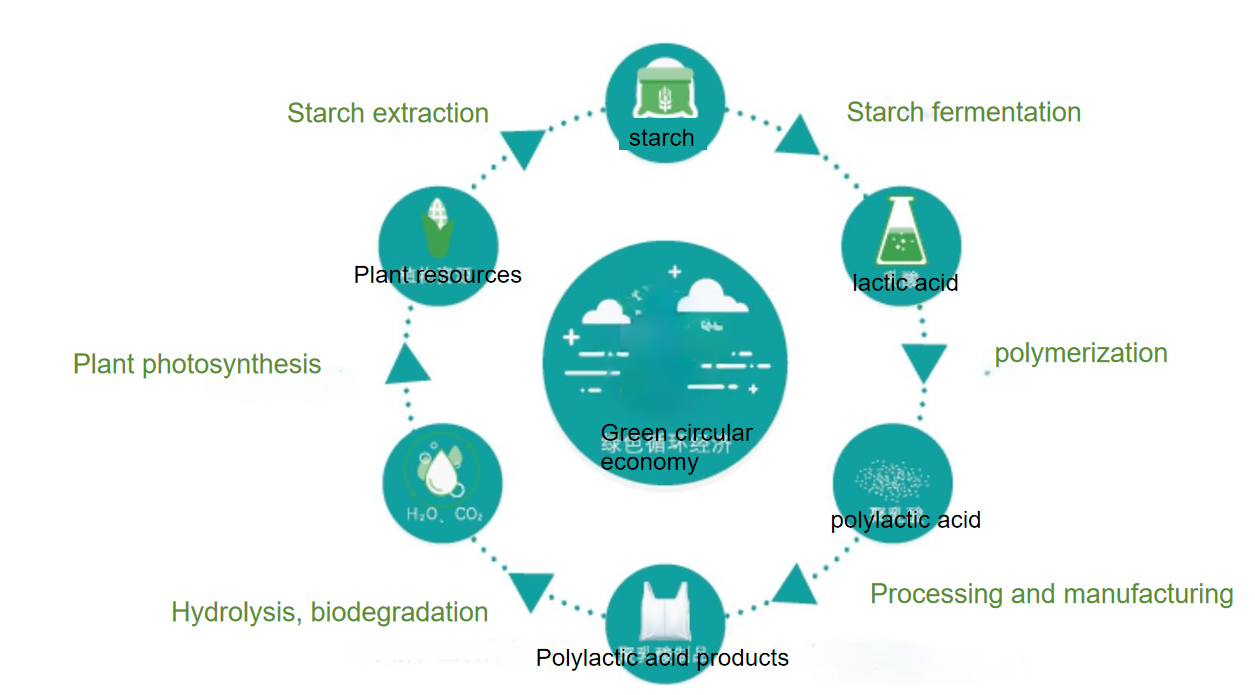
The PLA production process is pollution-free, and the product is biodegradable. After use, PLA can be composted and degraded into carbon dioxide and water at temperatures above 55°C or through the action of oxygen and microorganisms, thus achieving material cycling in nature without impacting the environment.
I. Characteristics of Polylactic Acid (PLA) Nonwoven Fabric
100% Biodegradable: Under composting conditions (primarily industrial composting), it can completely decompose into carbon dioxide and water within a few months, without producing microplastics, complying with the strictest environmental regulations in Europe and the US (such as the UK's ban on plastics in wet wipes).
Naturally Antibacterial and Antifungal: PLA is weakly acidic (pH 6.0-6.5), which is compatible with the slightly acidic environment of human skin, and has natural antibacterial and anti-mite effects (inhibitory effect on Staphylococcus aureus, etc.).
Moisture-wicking and Breathable: PLA fibers have low hygroscopicity (do not absorb water), but have good moisture-wicking properties, quickly transferring liquid through the surface layer to the absorbent layer, keeping the surface dry.
Safety: Good biocompatibility, non-toxic, non-irritating, and unlikely to cause allergies.
II. Common Manufacturing Processes
PLA Spunlace Nonwoven Fabric: Soft feel, water absorption can be adjusted through blending, mainly used for wet wipes.
PLA Spunbond Nonwoven Fabric: High strength, used for the top layer, bottom layer, or leak-proof barrier of diapers.
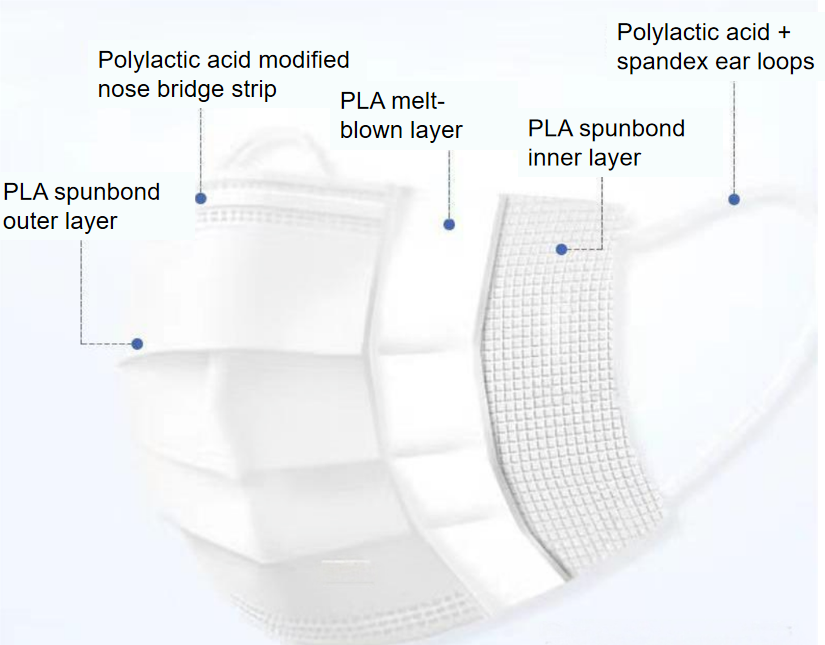
PLA Meltblown Nonwoven Fabric: Good filtration performance, used for face masks (technically more challenging, currently less common than PP meltblown).
III. Applications in Hygiene Products
With the implementation of global "carbon reduction" and "plastic ban" policies, the application of PLA in disposable hygiene products (AHPs) is growing rapidly.
1. Wet Wipes – Currently the most popular application
This is the fastest-growing area of PLA application, directly addressing the "plastic-containing wet wipes ban" in the UK and the EU.
Replacement target: Replacing traditional "polyester (PET) + viscose" blended fabrics.
Application form: PLA spunlace nonwoven fabric.
Advantages:
Meets "Plastic Free" certification requirements.
Because PLA does not absorb water, when made into wet wipes, it can better release the liquid to the wiping surface instead of locking it in the fabric, resulting in a higher liquid release rate than cotton.
Stronger than pure cotton and pure viscose, less likely to tear during wiping.
2. Baby Diapers & Pants
Top Sheet:
Utilizing PLA's hydrophobicity and moisture-wicking properties, urine can quickly penetrate, and the surface does not re-wet, keeping the baby's bottom dry.
Due to its naturally weak acidity, it helps prevent diaper rash.
Leg Cuffs:
Utilizing the hydrophobicity of PLA spunbond fabric to prevent urine leakage.
Back Sheet:
Although the back sheet is usually a film, the outer layer's fabric can use PLA to achieve a high biodegradability rate for the entire diaper.
3. Sanitary Napkins
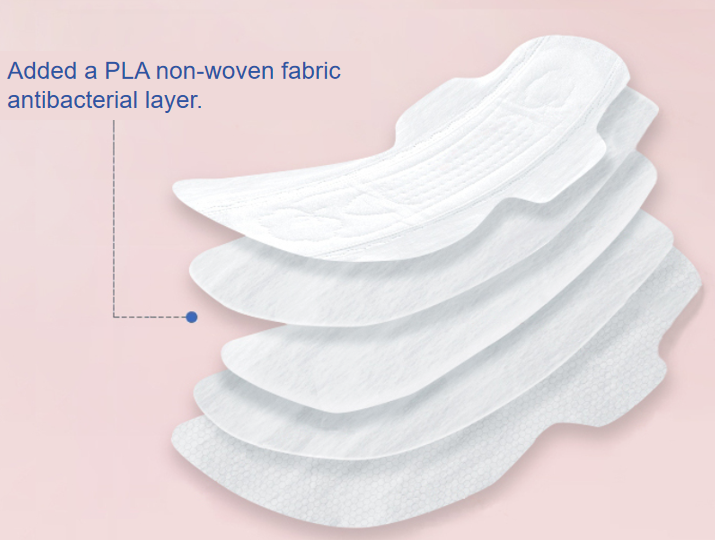
Top Layer: PLA hot air or spunbond nonwoven fabric is used for the top layer, providing a dry feel (similar to the effect of a "dry mesh surface," but with a feel closer to cotton).
Advantages: Women's private parts are sensitive during menstruation, and PLA's antibacterial and non-allergenic properties are major selling points for high-end sanitary napkins.
4. Medical and Sanitary Materials
Face masks: PLA non-woven fabric is used for the inner and outer layers of face masks, making them skin-friendly and non-allergenic (addressing the problem of facial allergies caused by wearing PP masks).
Surgical gowns/drapes: Their biodegradable properties reduce the burden of medical waste disposal.
IV. Advantages and Challenges
Advantages
Regulatory Compliance: Perfectly addresses regulatory restrictions such as the UK wet wipes ban and the EU SUP directive.
Market Premium: Brands can leverage high-end marketing concepts such as "100% plant-based," "eco-friendly," and "zero plastic."
Health Benefits: Compared to PP (polypropylene) and PET (polyethylene terephthalate), PLA is more skin-friendly for sensitive skin.
Challenges
Higher Cost: Currently, the price of PLA raw materials is still higher than PP and PET, leading to increased finished product costs (usually 30%-50% or even more).
Processing Difficulties:
PLA has a low melting point (approximately 170℃) and poor heat resistance, making it prone to shrinkage or sticking to rollers on high-speed production lines.
It has a relatively stiff feel; without special softening treatment, its texture is not as delicate as cotton or ultra-fine denier PP fibers.
Shelf Life Issues: PLA naturally degrades in high-temperature and high-humidity environments. When stored as finished products, it requires stricter storage conditions than traditional plastics; otherwise, the fabric may become brittle.
V. Future Development Trends
Technological Innovation: Developing blended nonwoven fabrics of PLA with materials such as PBAT and PHA to balance performance and cost.
Closed-Loop System Construction: Promoting the development of a recycling and composting system for hygiene products to achieve true circularity.
Policy Support: Subsidies and standard setting for bio-based materials by various countries will accelerate the popularization of PLA nonwoven fabrics.
Summary
Polylactic acid (PLA) nonwoven fabric, with its biodegradability, safety, and comfort characteristics, is gradually penetrating the hygiene products market, especially showing significant potential in the high-end and environmentally friendly segments. Despite facing cost and technological challenges, with the upgrading of green consumption and the maturation of the industrial chain, PLA nonwoven fabric is expected to become an important sustainable development solution in the field of hygiene materials.